
Panama or Spain: find your ideal retirement
Everything you need to know to choose between the two flagship destinations we recommend most. Compare them side by side, then tell us your priorities and we'll personalize the plan.

Quick comparison
| Quick comparison | 🇵🇦 Panama | 🇪🇸 Spain |
|---|---|---|
| Currency | US dollar | Euro |
| Monthly budget (couple) | $2,000–$3,000 | €2,000–€3,000 |
| Retiree path | Pensionado visa | Non-Lucrative visa |
| Approval time | 3–6 months | 1–4 months |
| Financial requirement | $1,000/month pension | €28,800/year (savings or income) |
Quick comparison — Panama vs Spain
Everything you need to know to choose between the two flagship destinations we recommend most. Compare them side by side, then tell us your priorities and we'll personalize the plan.
Geography & climate
Tropical country bridging Central and South America, with over 1,600 km of Caribbean and Pacific coastline. Panama City combines a modern skyline with rainforest on its doorstep. Warm, tropical climate year-round with a rainy season (May–November). Its geographic location makes it a central travel hub: it is the crossroads of the Americas and home of the Panama Canal, with direct flights to North America, the Caribbean and South America.
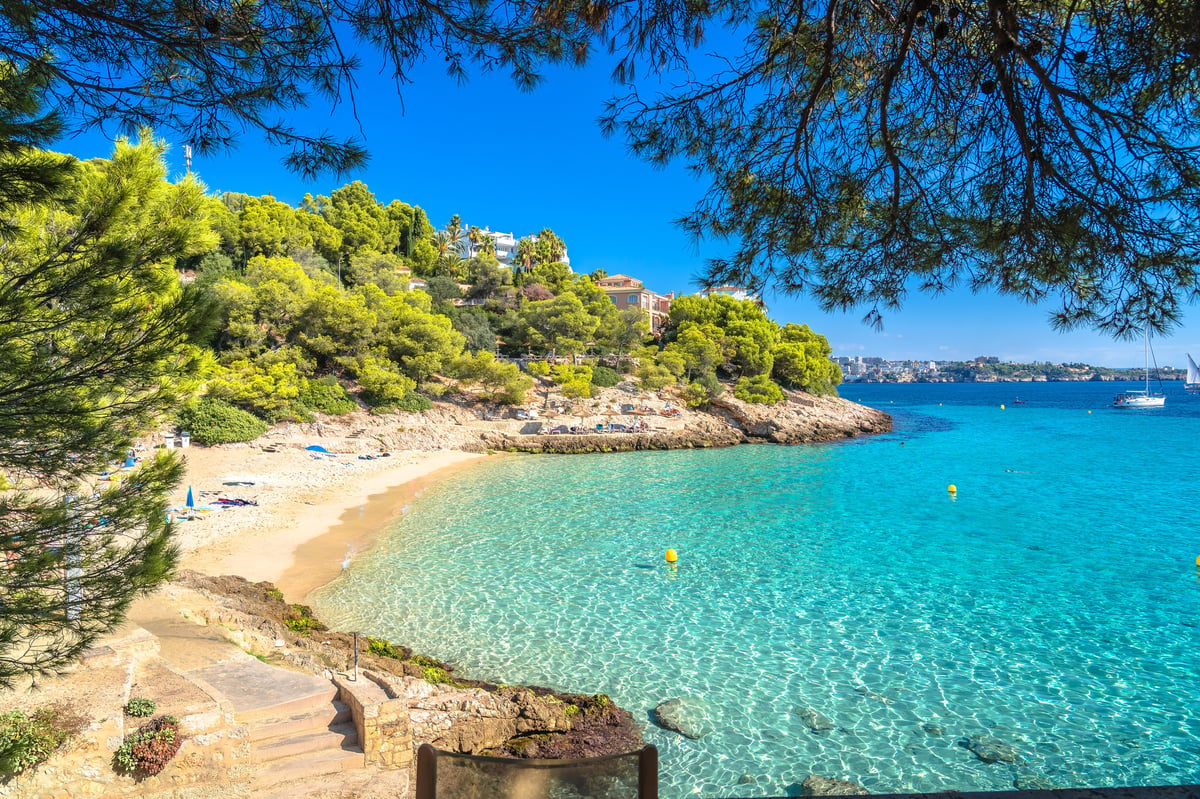
Southwestern Europe with a Mediterranean climate on the coast — warm, dry summers and mild winters. Diverse landscapes from the Costa del Sol's beaches to inland historic cities. ~3,000 hours of sunshine a year in the south. Spain is also your gateway to all of Europe: as a resident you travel freely within the Schengen area and access a continental network of flights, trains and connections.
Population & language
About 4.4 million people. Official language is Spanish, but English is widely spoken in business and expat circles. Large, well-established retiree communities in Panama City, Coronado and Boquete.
About 48 million people. Spanish (Castilian) is the official language. Major expat communities along the Costa del Sol, Valencia, Alicante and the Balearic Islands, plus full access to Spain's public healthcare.
Cost of living
A comfortable retirement is achievable on roughly $2,000–$3,000 USD per month for a couple. Groceries, dining and domestic help are noticeably cheaper than North America or Western Europe.
Moderate by Western European standards; a couple can live comfortably outside major hubs for €2,000–€3,000/month. Healthcare, dining and public transport are affordable, while housing in Madrid/Barcelona costs more.
Economy
One of Latin America's most stable economies. Uses the US dollar as its currency (eliminating exchange-rate risk), with a strong banking sector and growing service economy.
Uses the euro, one of the world's most traded currencies. Fourth-largest economy in the eurozone, with strong services, tourism and a developing renewable-energy sector.
Safety
Generally safe in well-populated areas frequented by expats. Areas like Costa del Este, Santa María and the artificial islands (such as the Ocean Reef project) show elevated safety rates, with security and controlled residential environments. As in any large city, caution is advised in certain neighborhoods and remote areas.
One of the safest countries in Europe, with low violent-crime rates. Common sense precautions around pickpocketing in tourist-heavy areas are enough.
Retiree benefits
The Pensionado visa offers significant discounts for retirees — up to 50% on entertainment, 25% on restaurants, 25% on utilities, and substantial savings on medical care and airfare. Panama also applies a territorial tax system: you pay no tax on income generated outside the country — you only pay on income produced within Panama.
Retirees can access Spain's public healthcare system (SNS) with residency, and the Non-Lucrative Visa path is well established. Spain has tax treaties with many countries that can reduce double taxation on pensions.
Property costs
You can buy a modern apartment in Panama City from around $150,000 USD, and beach or mountain homes for a similar range. Property taxes are low and there are occasional retiree exemptions.
Coastal apartments from around €120,000–€200,000 depending on location; inland properties can be much cheaper. You'll pay transfer tax (ITP) of roughly 6–10% at purchase, plus annual property tax (IBI).
Immigration & timelines
The Pensionado (retiree) program is among the easiest in the world: it requires proof of a lifetime pension of at least $1,000 USD/month (add $250 for each dependent). Approvals are usually granted within 3–6 months. And a key detail: just 3 days after applying for residency you receive a card that already lets you stay and live in Panama while your permanent residency is processed.
The Non-Lucrative Visa has no age limit and does not require any investment — only proof of sufficient passive income or savings of about €28,800/year for the main applicant (400% of the IPREM). Residency renews every two years and can lead to permanent residency.
Visa requirements
Main requirement: a lifetime pension of at least $1,000 USD/month (plus $250 per dependent). You'll also need a clean background check and a health certificate. A lawyer handles most of the process on your behalf.
The Non-Lucrative Visa has no age limit. You must prove annual savings or ongoing income of €28,800/year for the main applicant, plus €7,200 for each dependent, from sources such as pensions, rental income, investments, savings or business income. Plus private health insurance, a clean background check and sworn translations. Processing varies by consulate (1–4 months).
Still deciding? Let's match you to the right country
Share your budget, lifestyle and priorities, and we'll tell you whether Panama or Spain fits you better — with a clear, personalized plan.